Projects

From coral reef restoration to underwater munition detection, ACES applies advanced airborne and marine sensing technologies to a broad range of environmental and scientific challenges.

Cards

hop

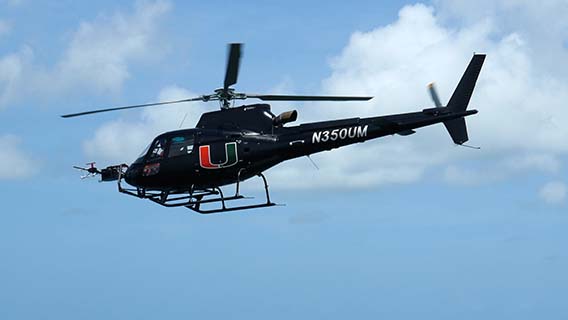
Multi-Functional Airborne Fluorescence Lidar to Assess Ocean Systems Health and Marine Pollution

NASA / BAE Systems

Phytoplankton biomass and composition are crucial indicators of ecosystem productivity and health, reflecting nutrient availability, water quality, and environmental conditions in ocean systems. However, coastal areas are increasingly threatened by pollution from anthropogenic sources, particularly plastic. Understanding the intricate interplay among phytoplankton dynamics, biogeochemical processes (including coral), and pollution is essential for assessing and mitigating impacts on coastal health.
Press Release
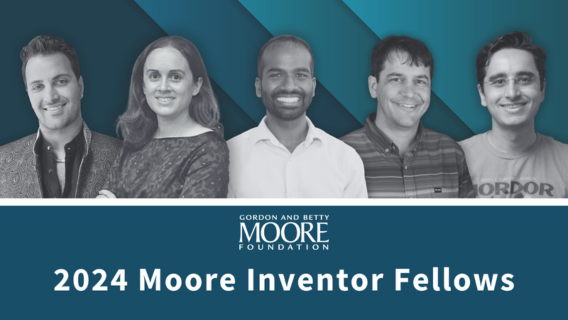
2024 Moore Foundation Fellows

Active Fluid Lensing: The Webb Moment for Oceanography

Gordon and Betty Moore Foundation

The Gordon and Betty Moore Foundation selected five aspiring inventors as the ninth cohort of Moore Inventor Fellows. This fellowship champions scientist-inventors who design groundbreaking tools and technologies — creative people poised to make substantial strides in scientific discovery, environmental conservation, and patient care.

Each scientist-inventor receives $825,000 in financial support to advance their invention forward. Chirayath plans to invent technology that can image the ocean floor in much the same way telescopes image the cosmos.
Press Release

ACES Drone Center Expansion

NASA

The Consolidated Appropriations Act of 2024 provided funding to expand the drone fleet, particularly to support rapid assessment of weather impacts and coral reef restoration.
Press Release

Utilizing NASA’s MiDAR Fluid Lensing and NeMO-Net for Automated Airborne Detection, Localization, and Characterization of Underwater Military Munitions

United States Department of Defense

This experimental effort is expected to validate the ability of these novel technologies to detect submerged munitions in a cost-effective and rapid manner, using unmanned aircraft to image large areas and machine learning to process data quickly. Fluid lensing’s ability to image through wave breaks and surf significantly improves domain awareness in this field and would be a major step forward in mitigating the threat of submerged munitions.
Project Website Final Report
aces

MiDAR Fluid Lensing

NASA

Merging NASA's MiDAR Active Multispectral Imaging Technology with Fluid Lensing for Next-Generation Aquatic Remote Sensing of Marine Systems and Debris. Fluid lensing is the highest-resolution aquatic remote sensing technology available, delivering distortion-free sub-cm 3D imagery at depths up to 20m. Combined with MiDAR, a patented NASA invention capable of multispectral imaging across the water-penetrating EM spectrum, the technology detects coral bleaching, disease, and marine debris, including biofouled plastics. Field campaigns in Puerto Rico, Guam, the Caribbean, the Pacific, and Australia have enabled coral reef conservation and benthic habitat mapping across critically endangered shallow-marine systems.

Reef-scale Imagery Acquisition at Horseshoe Reef (Mission: Iconic Reefs)

NOAA/ National Marine Sanctuary Foundation

ACES integrated airborne fluid lensing from its UAV fleet with in-water photogrammetry and benthic fish surveys conducted from its solar-electric research vessel to establish baseline 3D imagery of Horseshoe Reef in the Florida Keys. These datasets support NOAA’s Mission: Iconic Reefs program and provide a foundation for long-term coral reef restoration and monitoring.

OCEANOS: Ocean Community Engagement and Awareness using NASA Observations and Science for Low-Income Hispanic/Latino Students

NASA

OCEANOS trains low-income Hispanic/Latino high school seniors and first-generation undergraduates in Puerto Rico in NASA ocean color data, remote sensing image analysis, and DIY water-quality instrumentation. Students participate in oceanographic cruises, benthic surveys, and fieldwork in Caribbean coastal ecosystems, culminating in a community presentation and an opportunity to attend the SACNAS national conference. The program aims to reach at least 100 Spanish-speaking students and to make bilingual ocean science resources freely available online.
Project Website
PICOGRAM Coral Logo

PICOGRAM

NASA

Informing Coral Reef Resilience-Based Management through Prediction of Individual Coral Organismal Growth, Recruitment, and Mortality (PICOGRAM). PICOGRAM developed and operationalized an automated coral colony segmentation tool that uses machine learning to detect, segment, and track changes in coral colonies over time from underwater imagery. Built in partnership with NOAA's Pacific Islands Fisheries Science Center, the tool reached operational readiness in December 2025, with NOAA projecting a 30 to 50 percent increase in annotation efficiency. The tool was validated across reef sites in Guam, American Samoa, and the Pacific Remote Islands Area.

MarineVERSE

NASA

MarineVERSE (Marine Biodiversity and Scaling Project) is a global initiative investigating biodiversity across shallow-marine ecosystems. The project integrates in-situ coral reef observations collected during the Living Oceans Foundation Global Reef Expedition with multiscale satellite imagery and NASA Airborne Fluid Lensing data using advanced machine learning approaches.
Top